Sunday, June 13, 2010

We Are Scientists - Barbara


With the release of 2006's breakout second album With Love and Squalor (and the succeeding album Brain Thrust Mastery released in 2008), We Are Scientists has since become a successful indie rock songwriting duo (composed of lead vocalist and guitarist Keith Murray and bass guitarist and back-up vocalist Chris Cain) known for catchy hooks, sharp melodies and playful but heartfelt lyrics. Barbara, the band's fourth album, has much of what their fans have come to expect from their music – perhaps too much.

This effort has all the stylistic elements that have defined the band, just not at the level of their two previous albums. Barbara contains nothing as witty as With Love and Squalor's “Nobody Move Nobody Gets Hurt” nor does it boast anything as engaging or heartwarming as Brain Thrust Mastery's “After Hours”. Yet, Barbara does contain songs that are witty and some which can be heartwarming. It's as if the band is going through the same motions as before but they've lost the edge that made that made their previous works refreshing.

However, the duo's forth effort does mark an improvement in the mechanics and development of We Are Scientist's sound. Much of the credit for this technical development is due to new drummer Andy Burrows. He is a good match for the sound of the band and he provides creative arrangements (especially in “You Should Learn”) although he did better work in the more eclectic structure of his previous band Razorlight.

The band's more intricate sound is most apparent on the slow and haunting Pittsburgh, with Murray singing “All we want is to be together” over layered guitars while Burrow rolls deep-sounding drums in the background. The combination produces a dark, haunted sort of sound which contrasts well with the song’s mundane lyrics dealing with the pointless frustrations of flirting.

But while the structural development of “Pittsburgh” complements the content of the song, the sounds in Barbara are much too often a replacement for content. This is because while We Are Scientists is still succeeding at the things it does best, it is also hindered by the limitations it has always struggled with. Cain doesn't create riffs longer than a couple stanzas and Murray is still rarely able to make vocals purely emotional or purely witty. He only seems to know how to tease that line, while too-often ending up with lyrics which are vague and empty.

In a very simple way, the lack of content can be noticed in the much too repetitive nature of many of the album's tracks. For the first three songs of the album, the choruses are almost exclusively made up of one line repeated over and over. Murray sings “Rules don't stop me, forget about it”, “I don't bite but you can't believe it” and “If you're the nice guy act like the nice guy” as the respective choruses for the first three songs of the album, aptly named “Rules Don't Stop”, “I Don't Bite” and “Nice Guys”.

Repetition is not always a bad thing. In fact, sometimes it is an absolutely necessary part of good thematic elements within an album. However, in this instance, it is a clear replacement for content. After a full listen, Barbara doesn't yield one theme or idea attractive enough to latch on to.

In many ways, the new album is just as pretty as We Are Scientists' previous efforts, it's just not as engaging. In short, Barbara is a very listenable record, but it's also very forgettable.

Rating: 3/5 Stars

Friday, January 22, 2010

Vampire Weekend - Contra

At first listen, Contra may feel like a repeat of Vampire Weekend's self-titled debut. The songs are made of the same upbeat cacophony of often-neglected instruments and rich sounding vocals, and lead singer Ezra Koenig is still making aristocratic references which plebeians cannot comprehend.

But underneath the familiar sound is a subtle and engaging album. With Contra, Vampire Weekend has learned to thrive on the little things – like the dream-like piano lining the background of “Taxi Cab” or the faint guitar picking in “White Sky” and the slow building bridges in “Diplomat's Son.” Layered over a strong base of refreshingly creative vocals (especially the smooth, meandering rap in “Cousins”) and catchy riffs, these small tangents fit together like colored pieces in a stained glass window. Each idea is beautiful in its own right, adding to a greater composition.

While Contra may not boast anything as simply infectious as “A-Punk” or “Oxford Comma,” it is a more fulfilling effort from a band which has reaffirmed its identity while simultaneously expanding its borders.

4/5 Stars

Friday, January 8, 2010

The Informant!

http://www.diamondbackonline.com/polopoly_fs/1.476876!/image/572517945.jpg_gen/derivatives/landscape_240/572517945.jpg

The true story of FBI informant Mark Whitacre is probably not as relevant as it would have been in the mid-to-late ‘90s when corporate crime was rampant. But it is a very interesting and outrageous story — one that director Steven Soderbergh (Che), working with Matt Damon for the fifth time, and writer Scott Burns (The Bourne Ultimatum) very wisely tell as a brilliant comedy.

The Informant! follows Whitacre (a slightly heavier Matt Damon, The Bourne Ultimatum), a highly paid executive at an agricultural company called Archer Daniels Midland, as he decides to tell FBI Special Agents Brian Shepard (veteran TV actor Scott Bakula, Chuck) and Bob Herndon (Joel McHale, Community) about his company’s involvement in illegal price-fixing.

After looking into the case, the FBI agents convince Whitacre to wear a wire so he can give them enough evidence to take down the company. But Whitacre’s intentions aren’t as simple as the agents think. He has delusions of grandeur and seemingly aspires to be both a smooth secret agent (0014, because he is “twice as smart as 007”) and the new visionary leader of the company he is working to ruin.

As the FBI and Whitacre inch closer to their goal, it becomes very apparent the “white hat” protagonist isn’t telling the whole truth about his own part in ADM’s illegal practices. A snowball of hidden agendas, blatant lies and exaggerations ensue.

Throughout all the outrageous plot developments and twists, Whitacre narrates the story with a curious musing. He continually talks about things which are scarcely related to the unfolding events. Even as he is chest-deep in allegations of money laundering, kickbacks and millions of dollars in fraud, his only rambling thoughts are of the hunting rituals of polar bears. Or how he thinks his hands are his greatest asset in a meeting. Or why he thinks the metric system failed in the United States.

For this reason, he is a completely unreliable narrator and keeps the audience from ever seeing the whole truth. His thoughts are not only extremely funny, but this style of narrating gives The Informant! an element of surprise that is necessary for any good comedy. The voice-over is like a comedic magic act — it distracts the viewer with Whitacre’s hilarious musing, while all the real fun brews hidden in plain view.

The effect is only intensified by Damon’s brilliant performance. He uses a quiet and curious tone, mixed with exaggerated outbursts to give the main character a truly unique persona. He makes Whitacre believably unbelievable.

This is perfectly complemented by the expansive supporting cast. From Tony Hale’s (of The Goods: Live Hard, Sell Hard and Arrested Development fame) performance as Whitacre’s overly passionate lawyer to Scott Bakula’s straight-faced portrayal of Agent Shepard, everyone involved makes the movie seem effortless.

This feeling is also a by-product of the movie’s perfect pacing, brought upon by a good screenplay and careful directing. No scene or joke is drawn out for too long — a very common mistake in comedies — and at the end of the movie it is surprising how much has happened. But at the same time, Soderbergh draws enough fun from trivial things (like a scene of Whitacre narrating an FBI tape) to keep the laughs rolling.

The most interesting thing about The Informant! is the fact that it is a comedy. The story of Whitacre is actually a pretty serious affair and could easily be told as a drama. The filmmakers realized this but still decided to tell the story as it is, all while drawing out the irony and insanity it contained.

For this reason, The Informant! is unlike many comedies out there today. It never stretches for laughs. It is simply an interesting and well-told story — one that just happens to be hilarious.

4.5/5 Stars

Tuesday, February 3, 2009

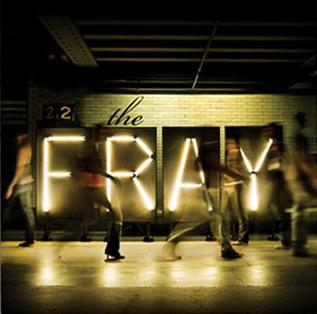
The Fray - The Fray


Unlike most bands, The Fray's greatest flaw is widely known: The group works with a serious lack of variety. This seems to have been the most recurring criticism of the group's debut album, How to Save a Life, and it is again the biggest problem on the band's self-titled sophomore effort.

The Fray should have been a redefining album for a band with some promise, but instead it plays as another humdrum collection of bittersweet anthems. There is practically no thematic contrast between The Fray and How to Save a Life.

This is perhaps no more evident than in the first single, "You Found Me" - a track built on formula.

Just like previous Fray singles, it starts with a piano intro quickly followed by electric guitar riffs and drums that wind up to anthem-like choruses always marked by cymbal crashes. At some point, the song works its way to a climax, breaks down to just piano and vocals and then hits the final chorus with even more melancholic vigor.

In fact, this is pretty much the formula for the entire album, give or take a few details. The songs aren't bad - in fact, the band is pretty talented at laying down intricate melodies and constructing catchy riffs. But the group's elaborate anthems lose context amid predictability and monotony, and eventually the entire album becomes tiresome.

And it isn't just the physical sound that seems mechanical. The Fray also employs the same themes and lyrical style as How to Save a Life. Lead singer Isaac Slade is still crooning about longing and friendship in the same breathy vocals and melancholic tone. When he sings, "Lost and insecure/ You found me/ You found me," he might as well be singing, "Everyone knows I'm in/ Over my head/ Over my head," or any other vague go-to phrase from a sorrowful list. It really doesn't make a difference.

Perhaps it's because The Fray simply cannot strike up a tone other than bittersweet. Even the album's final song, ironically titled "Happiness," is melancholy. Slade sings, "Happiness feels a lot like sorrow/ Let it be, you can't make it come or go/ But you are gone, not for good, but for now/ And gone for now feels a lot like gone for good." Some happiness.

So The Fray has made very little progress since its debut, but this isn't the real tragedy. No, the problem comes in the lack of deviation from form throughout the album, save for a few rare moments.

In the slow, swinging "Ungodly Hour," The Fray abandons its obsession with the sensational and creates a beautifully bare and honest song. Slade even loses his breathy whine for clear vocals, while drums roll smoothly in the background and the guitar lightly plucks out riffs. The song never builds and feels more natural than any of the album's previous power anthems. The effect is mesmerizing and reveals a band with a great potential for songwriting.

But this realization just makes the album's failure even more evident.

It really is hard to blame The Fray, though. The band has found its winning combination, which may be enough to capture American airwaves for a time - but it's not enough to sustain a full-length record.

2.5/5 Stars

Monday, November 24, 2008

Travis - Ode to J. Smith


Travis' sixth studio album, Ode to J. Smith, is perhaps the band's most ambitious effort yet. The album marks a return to the rockier roots of the group's debut, Good Feeling, and the effort pays off - most of the time.

J. Smith abandons much of the swooning, swinging acoustic anthems fans have come to love for energetic and gritty rock songs. Amid this change, Travis recaptures the youthful energy of its earlier albums while still retaining the honest and beautiful songwriting of the band's most recent works.

Much of this combination can be seen in the album's first single, "Something Anything." It's a simple and catchy tune with honest lyrics, but the background rocks with heavy-sounding electric guitars. While lead singer Fran Healy sings the straightforward lines, "Something anything just to keep believing/ Just to keep me breathing for a moment longer," whining guitars are layered with brilliant backup vocals.

It's a more involved sound than Travis would normally produce, and it shows in the disc's most exemplary songs. Lead guitarist Andy Dunlop is never short of guitar riffs, and Neil Primrose's drums drive the intensity at the right moments. Also, J. Smith includes the most detailed vocal layering Travis has ever crafted.

Most times the efforts are very rewarding, like the jagged piano solo in leading track "Chinese Blues" or the rolling drums of "Get Up." Other effects feel like a stretch, such as the impromptu a cappella of (almost) title track "J. Smith," which takes away some of the vitality of an otherwise brilliant song.

But on the whole, Travis' experimental sounds pay off. Healy seems to find the edge in his voice in the thrilling and energetic masterpiece "Long Way Down." Toward the end of the short track, the band is not afraid to let the rhythm break down into a funky outro. It sounds playful and natural and reveals a band not afraid to let a song take an unconventional course.

Even though it's hit and miss for Travis' latest effort, the group's playfulness gives J. Smith its drive and definition. But while ambitious and fresh-sounding tunes "Long Way Down," "Chinese Blues" and "Last Words" conjure a coherent sound for J. Smith, some of the more timid tracks hinder the album's momentum.

For example, in the slow, swinging "Friends," Healy sings, "Friends/ Will never desert you/ Or turn against/ Friends/ Won't love you and leave you/ To mend the fence." The song's softer and more restrained lyrics and sounds feel very out of place and take away from the album's vigor.

The momentum drops off completely at the very end with the generic-sounding anthem "Before You Were Young" - a song that would sound more appropriate on a Coldplay album than it does on J. Smith.

And while "Before You Were Young" and "Friends" don't fit with the rockier sounds of J. Smith, other songs seem to be there only because they do fit. For example, "Broken Mirror" obviously fits and can find its place in the album, but it really is not a good enough song to contribute to the effect - it just takes up space.

But as a whole, J. Smith has enough kick to produce an exhilarating and fresh sound - a sound Travis has desperately needed. The successes of the album far outshine its setbacks and if the band's courage had persisted for the full length, Ode to J. Smith would be by far Travis' best album yet.

3.5/5 Stars

Monday, November 10, 2008

Snow Patrol - A Hundred Million Suns

A Hundred Million Suns, Snow Patrol's fifth studio album, ends with a 16-minute, three-part song called "The Lightning Strike." The idea is creative and the result is pleasing, but in terms of creativity and ambition, it comes too little and too late.

Suns' marks very little progress for Snow Patrol - the record's biggest problem. In fact, it feels more like a mere extension of the band's previous album, Eyes Open, than a separate and whole entity. The band has yet again decided to choose moody string-laden love ballads over the rockier sounds of the group's earlier works, and this time around, Snow Patrol's faster-paced songs don't have enough vigor to punctuate the album's gloomy setting.

This could be the sound of Snow Patrol attempting to recapture the success of the ever-popular "Chasing Cars," a song responsible for the band's peak in popularity. But while attempting to wind up more heart-throbbing masterpieces, Snow Patrol has allowed its newest effort to play out like a Grey's Anatomy soundtrack.

Collectively, the songs are written as one extremely vague love epic; they are filled with countless expressions of intimacy but they never reach any insight or definite point of view. It sounds like the band took different statements of longing from all the love-sick teenage bloggers in the world and strung them together.

For example, in the warped-sounding rock song "Engines," lead singer Gary Lightbody begins almost every line with the phrases: "You say you love me like the ... ," "I know I love you like the ... " or "I know you love me like the ... , " which is followed by some simile comparing love to a different cosmic object. Not only are these lyrics not inventive, but their repetition also gives the listener a sense there is little content to spread around - a sense gleaned from the album as a whole.

It's like butter spread over too much bread. When Lightbody runs out of words to sing, he repeats. Choruses and verses bleed into each other, electronics and strings build to a climax. Over and over again.

But when every song in an album is filled with a sort of crescendo effect, the album as a whole tends to forgo its own momentum. And without momentum, A Hundred Million Suns loses any sense of identity and becomes a forgettable endeavor.

Despite its setbacks, Suns isn't all bad. Lightbody has always been talented at writing tunes that stick from the first bar. Tracks such as "Crack the Shutters," "Take Back the City" and "Set Down Your Glass" are particularly catchy and contain at least enough content to keep listeners satisfied for a little while. Also, as mentioned before, much of the lengthy 16-minute finale works well and avoids the tedious mediocrity seen in the rest of the album.

In the middle of the empty spheres of A Hundred Million Suns, these songs just seem to fade into the background and become run-of-the-mill attempts. A Hundred Million Suns is not particularly bad, but the effect of very little substance combined with rambling repetition seems to only exhaust the listener.

Or, at the very least, provide the perfect soundtrack to a Thursday-night hospital drama.

2.5/5 Stars

IGOR

Pixar, the king of computer-animated features, decided adorable robots and superhero families appeal to children. And they were right. But the Weinstein Company took a different direction for Igor and thought children would respond well to mad science and jokes about murder.

Jumping from American Dad! to the silver screen, writer Chris McKenna peppers the film with morbid bits about brainwashing and blind orphans. It's a valiant effort with an ambitious concept, but tonally, Igor just implodes.

In the nightmarish comedy directed by Tony Leondis (Lilo and Stitch 2), John Cusack (War, Inc.) voices Igor. The hunchbacked, downtrodden lab assistant, despite coming from a race of servants, aspires to be the best evil scientist in the twisted land of Malaria. After his master is blown up in an experiment, Igor decides to take his chance and compete in the annual Evil Science Fair. He goes in pretty optimistically with an invention only God can compete with: life.

However, he soon realizes his plan for an intelligent and deadly monster has gone awry. Instead, he ends up with a giant, gentle-hearted Betty Boop look-alike.

Igor enlists the help of his two friends, a cynical rodent named Scamper (Steve Buscemi, I Now Pronounce You Chuck & Larry) and an encased brain (Sean Hayes, Will & Grace) that is (ironically) very stupid. Meanwhile, the evil and scheming Dr. Schadenfreude (Eddie Izzard, The Chronicles of Narnia: Prince Caspian) attempts to steal Igor's monster, thinking it is the destructive invention Igor intended.

Taking a page from Tim Burton's The Nightmare Before Christmas, the film's production design is scattered with stitched faces and ghoulish characters. In Malaria, the sun doesn't shine, and everyone is encouraged to be evil. Kudos to the filmmakers for choosing a setting not littered with wide-eyed animals and the normal, pandering kiddie fare.

But the film's creativity extends only about as far as its premise, and falls short in its reliance on cliché characters. The movie's protagonist is especially typical - as an underdog with a can-do attitude, self-deprecating to a fault.

And while the circumstantial comedy is certainly inventive, it really isn't very funny. Igor seems hesitant to decide whether it's a smart, dark satire or another silly ride. Punchy one-liners and ironic situations - with Buscemi's character gerring the especialy clever lines -but never go belly-deep. Buscemi's character gets the especially clever lines. More times than not, though, laughing cues would have been helpful.

While most animated films contain humor that appeals simulataneously to adults and kids, Igor swings back and forth. Jokes about severed arms and James Lipton references sit side by side with typical physical and bathroom humor. With a little more consistency, Igor could have been a far more enjoyable rift on the Frankenstein legacy.

Although the characters aren't terribly engaging, Igor is very well cast. Cusack is a good fit for an underdog protagonist, and although it may be a terrible thing to say, Buscemi is a perfect choice for a sarcastic, jittery, bug-eyed rodent. Even contained in studio sound booths, the chemistry shines through between the two seasoned actors. Their comedic flare is dimmed only by the dour setting.

The movie's overall concept is both its greatest strength and greatest weakness. Igor's oddities and surprises are able to keep its audience interested. But in attempting to captivate both adults and kids, Igor fails to keep either fully enthralled. Too dark and sinister for youngsters and not intelligent enough for adults, the film never gets a true sense for who it wants to please most. Despite a strong cast and ample sarcasm, Igor slips into mediocrity - a promising invention gone wrong.

It's (almost) alive.

2.5/5 Stars