Showing posts with label Album Reviews. Show all posts

Friday, January 22, 2010

Vampire Weekend - Contra

At first listen, Contra may feel like a repeat of Vampire Weekend's self-titled debut. The songs are made of the same upbeat cacophony of often-neglected instruments and rich sounding vocals, and lead singer Ezra Koenig is still making aristocratic references which plebeians cannot comprehend.

But underneath the familiar sound is a subtle and engaging album. With Contra, Vampire Weekend has learned to thrive on the little things – like the dream-like piano lining the background of “Taxi Cab” or the faint guitar picking in “White Sky” and the slow building bridges in “Diplomat's Son.” Layered over a strong base of refreshingly creative vocals (especially the smooth, meandering rap in “Cousins”) and catchy riffs, these small tangents fit together like colored pieces in a stained glass window. Each idea is beautiful in its own right, adding to a greater composition.

While Contra may not boast anything as simply infectious as “A-Punk” or “Oxford Comma,” it is a more fulfilling effort from a band which has reaffirmed its identity while simultaneously expanding its borders.

4/5 Stars

Tuesday, February 3, 2009

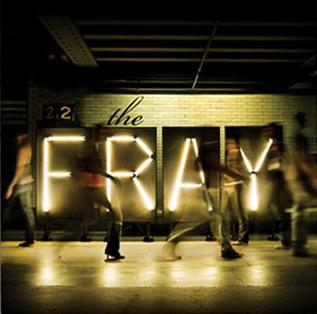
The Fray - The Fray


Unlike most bands, The Fray's greatest flaw is widely known: The group works with a serious lack of variety. This seems to have been the most recurring criticism of the group's debut album, How to Save a Life, and it is again the biggest problem on the band's self-titled sophomore effort.

The Fray should have been a redefining album for a band with some promise, but instead it plays as another humdrum collection of bittersweet anthems. There is practically no thematic contrast between The Fray and How to Save a Life.

This is perhaps no more evident than in the first single, "You Found Me" - a track built on formula.

Just like previous Fray singles, it starts with a piano intro quickly followed by electric guitar riffs and drums that wind up to anthem-like choruses always marked by cymbal crashes. At some point, the song works its way to a climax, breaks down to just piano and vocals and then hits the final chorus with even more melancholic vigor.

In fact, this is pretty much the formula for the entire album, give or take a few details. The songs aren't bad - in fact, the band is pretty talented at laying down intricate melodies and constructing catchy riffs. But the group's elaborate anthems lose context amid predictability and monotony, and eventually the entire album becomes tiresome.

And it isn't just the physical sound that seems mechanical. The Fray also employs the same themes and lyrical style as How to Save a Life. Lead singer Isaac Slade is still crooning about longing and friendship in the same breathy vocals and melancholic tone. When he sings, "Lost and insecure/ You found me/ You found me," he might as well be singing, "Everyone knows I'm in/ Over my head/ Over my head," or any other vague go-to phrase from a sorrowful list. It really doesn't make a difference.

Perhaps it's because The Fray simply cannot strike up a tone other than bittersweet. Even the album's final song, ironically titled "Happiness," is melancholy. Slade sings, "Happiness feels a lot like sorrow/ Let it be, you can't make it come or go/ But you are gone, not for good, but for now/ And gone for now feels a lot like gone for good." Some happiness.

So The Fray has made very little progress since its debut, but this isn't the real tragedy. No, the problem comes in the lack of deviation from form throughout the album, save for a few rare moments.

In the slow, swinging "Ungodly Hour," The Fray abandons its obsession with the sensational and creates a beautifully bare and honest song. Slade even loses his breathy whine for clear vocals, while drums roll smoothly in the background and the guitar lightly plucks out riffs. The song never builds and feels more natural than any of the album's previous power anthems. The effect is mesmerizing and reveals a band with a great potential for songwriting.

But this realization just makes the album's failure even more evident.

It really is hard to blame The Fray, though. The band has found its winning combination, which may be enough to capture American airwaves for a time - but it's not enough to sustain a full-length record.

2.5/5 Stars

Monday, November 24, 2008

Travis - Ode to J. Smith


Travis' sixth studio album, Ode to J. Smith, is perhaps the band's most ambitious effort yet. The album marks a return to the rockier roots of the group's debut, Good Feeling, and the effort pays off - most of the time.

J. Smith abandons much of the swooning, swinging acoustic anthems fans have come to love for energetic and gritty rock songs. Amid this change, Travis recaptures the youthful energy of its earlier albums while still retaining the honest and beautiful songwriting of the band's most recent works.

Much of this combination can be seen in the album's first single, "Something Anything." It's a simple and catchy tune with honest lyrics, but the background rocks with heavy-sounding electric guitars. While lead singer Fran Healy sings the straightforward lines, "Something anything just to keep believing/ Just to keep me breathing for a moment longer," whining guitars are layered with brilliant backup vocals.

It's a more involved sound than Travis would normally produce, and it shows in the disc's most exemplary songs. Lead guitarist Andy Dunlop is never short of guitar riffs, and Neil Primrose's drums drive the intensity at the right moments. Also, J. Smith includes the most detailed vocal layering Travis has ever crafted.

Most times the efforts are very rewarding, like the jagged piano solo in leading track "Chinese Blues" or the rolling drums of "Get Up." Other effects feel like a stretch, such as the impromptu a cappella of (almost) title track "J. Smith," which takes away some of the vitality of an otherwise brilliant song.

But on the whole, Travis' experimental sounds pay off. Healy seems to find the edge in his voice in the thrilling and energetic masterpiece "Long Way Down." Toward the end of the short track, the band is not afraid to let the rhythm break down into a funky outro. It sounds playful and natural and reveals a band not afraid to let a song take an unconventional course.

Even though it's hit and miss for Travis' latest effort, the group's playfulness gives J. Smith its drive and definition. But while ambitious and fresh-sounding tunes "Long Way Down," "Chinese Blues" and "Last Words" conjure a coherent sound for J. Smith, some of the more timid tracks hinder the album's momentum.

For example, in the slow, swinging "Friends," Healy sings, "Friends/ Will never desert you/ Or turn against/ Friends/ Won't love you and leave you/ To mend the fence." The song's softer and more restrained lyrics and sounds feel very out of place and take away from the album's vigor.

The momentum drops off completely at the very end with the generic-sounding anthem "Before You Were Young" - a song that would sound more appropriate on a Coldplay album than it does on J. Smith.

And while "Before You Were Young" and "Friends" don't fit with the rockier sounds of J. Smith, other songs seem to be there only because they do fit. For example, "Broken Mirror" obviously fits and can find its place in the album, but it really is not a good enough song to contribute to the effect - it just takes up space.

But as a whole, J. Smith has enough kick to produce an exhilarating and fresh sound - a sound Travis has desperately needed. The successes of the album far outshine its setbacks and if the band's courage had persisted for the full length, Ode to J. Smith would be by far Travis' best album yet.

3.5/5 Stars

Monday, November 10, 2008

Snow Patrol - A Hundred Million Suns

A Hundred Million Suns, Snow Patrol's fifth studio album, ends with a 16-minute, three-part song called "The Lightning Strike." The idea is creative and the result is pleasing, but in terms of creativity and ambition, it comes too little and too late.

Suns' marks very little progress for Snow Patrol - the record's biggest problem. In fact, it feels more like a mere extension of the band's previous album, Eyes Open, than a separate and whole entity. The band has yet again decided to choose moody string-laden love ballads over the rockier sounds of the group's earlier works, and this time around, Snow Patrol's faster-paced songs don't have enough vigor to punctuate the album's gloomy setting.

This could be the sound of Snow Patrol attempting to recapture the success of the ever-popular "Chasing Cars," a song responsible for the band's peak in popularity. But while attempting to wind up more heart-throbbing masterpieces, Snow Patrol has allowed its newest effort to play out like a Grey's Anatomy soundtrack.

Collectively, the songs are written as one extremely vague love epic; they are filled with countless expressions of intimacy but they never reach any insight or definite point of view. It sounds like the band took different statements of longing from all the love-sick teenage bloggers in the world and strung them together.

For example, in the warped-sounding rock song "Engines," lead singer Gary Lightbody begins almost every line with the phrases: "You say you love me like the ... ," "I know I love you like the ... " or "I know you love me like the ... , " which is followed by some simile comparing love to a different cosmic object. Not only are these lyrics not inventive, but their repetition also gives the listener a sense there is little content to spread around - a sense gleaned from the album as a whole.

It's like butter spread over too much bread. When Lightbody runs out of words to sing, he repeats. Choruses and verses bleed into each other, electronics and strings build to a climax. Over and over again.

But when every song in an album is filled with a sort of crescendo effect, the album as a whole tends to forgo its own momentum. And without momentum, A Hundred Million Suns loses any sense of identity and becomes a forgettable endeavor.

Despite its setbacks, Suns isn't all bad. Lightbody has always been talented at writing tunes that stick from the first bar. Tracks such as "Crack the Shutters," "Take Back the City" and "Set Down Your Glass" are particularly catchy and contain at least enough content to keep listeners satisfied for a little while. Also, as mentioned before, much of the lengthy 16-minute finale works well and avoids the tedious mediocrity seen in the rest of the album.

In the middle of the empty spheres of A Hundred Million Suns, these songs just seem to fade into the background and become run-of-the-mill attempts. A Hundred Million Suns is not particularly bad, but the effect of very little substance combined with rambling repetition seems to only exhaust the listener.

Or, at the very least, provide the perfect soundtrack to a Thursday-night hospital drama.

2.5/5 Stars